
The first federal minimum wage bill was signed into law during Franklin D. Roosevelt’s second term as U.S. President.
The Great Depression gave Washington a pretext to enact sweeping economic restrictions. So, by 1938, Congress had made it illegal for employees to charge less than 25 cents per hour for their labor services.
Today’s inflation-adjusted minimum wage is much higher than it was under FDR. In 30 states and in our capital, the minimum wage exceeds the federal requirement of $7.25. Additionally, 58 localities (mostly in California) have imposed higher restrictions than their state legislators.
The Raise the Wage Act is just the most recent attempt to further increase the federal minimum wage. The Economic Policy Institute claims that with a $17 minimum wage, nearly 28 million employees will gain total annual benefits of $86 billion, or $3,100 more for each minimum wage earner.
The Center for American Progress naively thinks everyone will keep their jobs. If that were true, raising the minimum wage to just $15 could “increase the wages of 1 in 4 workers—nearly 40 million—and lead to an annual wage increase as large as $8,000 for some of the lowest-wage workers.”
But that’s not how the real world works.
Proponents of the Act say it is “an investment in growing the middle class.” The National Employment Law Project promises that it will improve “infant health, mental health, children’s math and reading scores, and educational attainment.”
It’s also supposed to reduce “deaths of despair, child abuse, and teenage pregnancy.”
The American Federation of Labor and Congress of Industrial Organizations is one of the main advocates of the Raise the Wage Act. Why does a special interest group, which represents highly skilled employees who earn more than the federal minimum, spend so much money to lobby for this proposal? We’ll get to that later.
Unseen Consequences Are Worse than Benefits
Why Entry-Level Workers Pay the Highest Price

The seen benefits of this Act appear good. But as with every policy, the unseen consequences are often much worse.
Looking at the Raise the Wage Act, the Congressional Budget Office concludes, “Some employers would employ fewer workers than they would have employed under a lower minimum wage.”
As a result, the higher cost to hire lower-skilled workers will destroy opportunities to find jobs. Millions will be left out of the labor force.
CATO Institute experts predict even more negative consequences, including reducing employee work hours and benefits and charging consumers higher prices. We might assume that firms will absorb the higher labor costs and take a dip in their profits. But in real life, entrepreneurs are “cutting employment and making other decisions to maintain their net earnings,” according to the CATO Institute.
The Harvard Business Review notes that a previous increase of just $1 caused the percentage of employees working more than 20 hours per week to decrease by 23%. (Working 20 hours per week is the threshold for employees to be eligible for retirement benefits.)
Meanwhile, the percentage of workers with more than 30 hours per week—making them eligible for health care benefits—decreased by 14.9%. And total wage compensation decreased by 13.6%! Under these circumstances, it becomes more challenging to juggle multiple jobs to earn enough money to pay the bills. This results in lower employee motivation and fewer opportunities for workers to improve their skills.
When all was said and done, America suffered from lower long-run productivity gains and suppressed economic growth.
It’s Important to Look at Who Supports Increasing the Minimum Wage
Looking Closely at Who Benefits From Wage Increases
Why do so many people support increasing the minimum wage? To answer this, we first need to identify who they are, what they know, and what they want.
Consider the following three groups of decision makers: voters, public servants, and union bosses.
Most voters don’t understand the laws of economics. They want to feel good about themselves and be perceived as compassionate. So, they support candidates who promise to impose tougher minimum wage restrictions as a way of virtue signaling.
Politicians need votes to obtain power. With so many gullible voters, it’s easy to promise a raise of the minimum wage to help the poor. It is a politician’s easiest way to virtue signal in the pursuit of selfish goals. (In some cases, these legislators come to believe their own lies.)
How about union bosses whose members already earn higher wages? Do they demand increases of the minimum wage out of solidarity? Of course not. The most effective way for skilled union workers to obtain higher incomes and more job security is to make unskilled, non-union labor more expensive.
Minimum wage laws are not an example of policymaking where good intentions produce unintended negative consequences. They are designed to make the poor dependent on government handouts while helping their proponents gain more power, money, and respect.
Ultimately, the goal should be to build a society where everyone has the opportunity to succeed and thrive, not just through mandated wage increases, but through sustainable economic policies that promote long-term prosperity. With thoughtful consideration and a commitment to evidence-based policymaking, we can find solutions that benefit both workers and employers, ensuring a brighter future for all.
About the Authors
Dr. Alex Tokarev is Associate Professor of Economics and Philosophy at Northwood University, one of the top undergraduate business schools in Michigan. An award-winning up-and-comer in free enterprise thought leadership, Kristin Tokarev is a producer for John Stossel at Stossel TV. Kristin earned a B.B.A. in economics and an M.S. in Business Analytics from Northwood University.
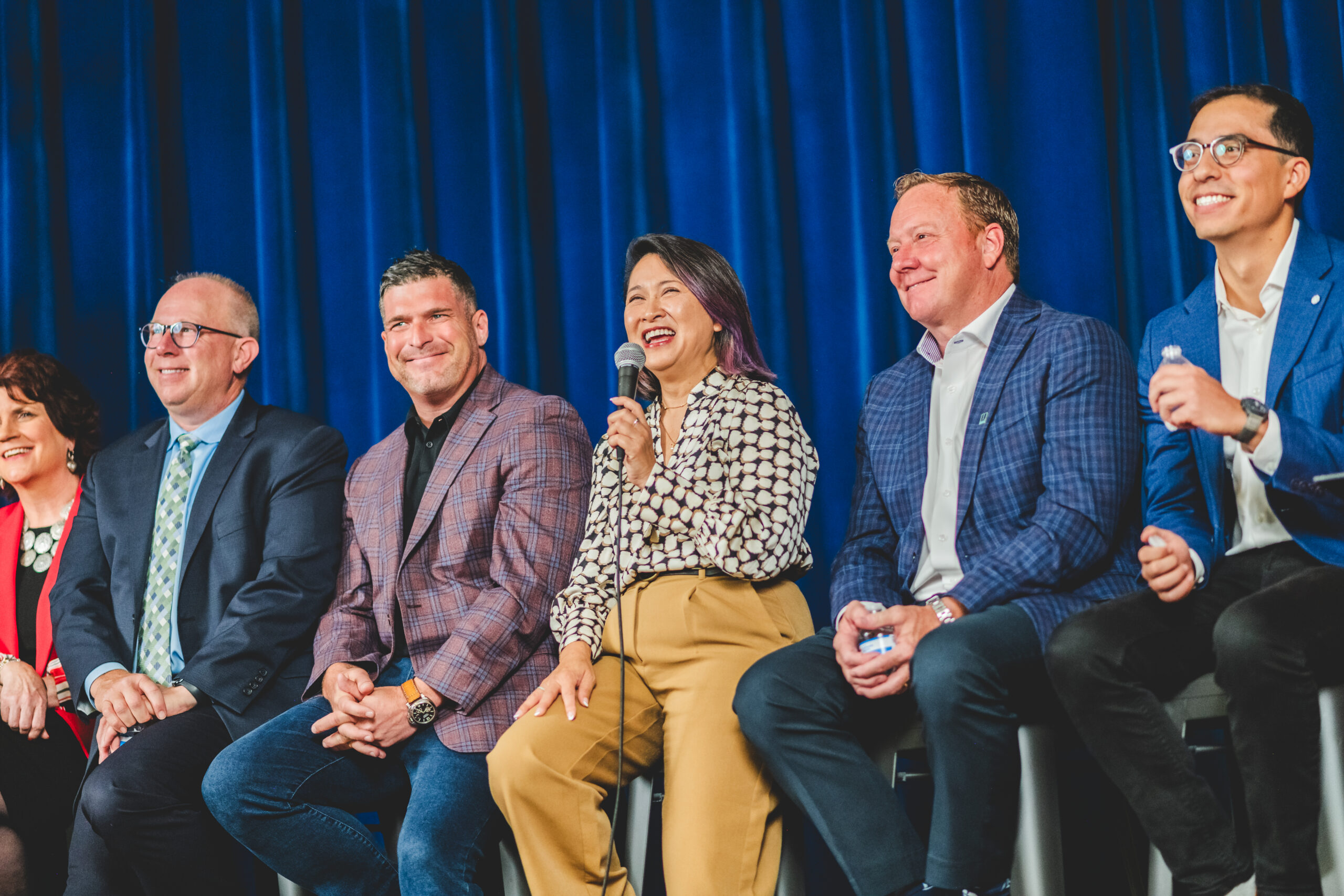
Together, they researched the effects of minimum wage restrictions for the McNair Center for Free Enterprise at Northwood University and Stossel TV. The pair will also present their findings and examine why bad economics makes good politics during a Sept. 24, 2024, lecture at Northwood University that is part of the 2024 Northwood University Freedom Seminar. Visit the website for more details, including how to watch the lecture online.
This piece was published in the September edition of When Free to Choose, Northwood’s signature publication promoting free enterprise. Subscribe today at no cost!