
Cybersecurity
Available In-Person & Online
Defend Against Hacking. Protect Data. Join the Growing Tech Industry.
With two cybersecurity degree options to fit your goals, the Bachelor of Science in Cybersecurity and the new, reduced-credit Bachelor of Applied Science in Cybersecurity, you can earn your cybersecurity degree online or on campus.
Our industry-certified faculty will give you hands-on training in information security, cybersecurity tactics, and IT risk management. You’ll graduate prepared to meet the growing demand for skilled professionals in business and information technology, with not only the principles of safeguarding digital data but also a practical skill set immediately applicable in the real world, where companies can no longer afford to ignore cybersecurity threats.
Learn More About Our Programs
By checking this box, I consent to receive recurring automated text messages and AI-assisted phone calls from Northwood University regarding admissions, program updates, and related opportunities. These messages may be sent using an autodialer or artificial voice technology. Your consent is optional and not a condition of admission or otherwise receiving our services.
Message Frequency: Message and call frequency may vary based on your engagement with Northwood.
Fees: Standard message and data rates may apply.
Opt-Out: You may opt out at any time by replying STOP to any text message or informing the caller during a call.
Customer Care: For assistance, reply HELP to any text message or contact us at (800) 622-9000 or .
Privacy & Terms: Your information will be handled in accordance with our Privacy Policy and Terms & Conditions.
northwood by the numbers
Fast Facts
Northwood University is an international leader in free-enterprise education.
3.4M
Global shortage of cybersecurity professionals
58%
Of technologists say hands-on learning is the best way to apply new skills
83%
Of corporate boards recommend increasing IT security headcount
#6
Best College for Business in Michigan

Your Career After NU
What jobs can you get with a Cybersecurity degree?
With a cybersecurity degree, you can start your career protecting organizations from digital threats.
From ethical hacking and penetration testing to securing networks and managing cyber risk, you’ll gain the skills needed to defend businesses, governments, and institutions in an increasingly digitized world.
- Cybersecurity Analyst
- Penetration Tester
- Cybersecurity Engineer
- Incident Response Specialist
- Digital Forensics Analyst
- Information Security Officer
- Risk Management Specialist
- Network Security Administrator
- State and Federal Government
- Healthcare
- Transportation
- E-Commerce/online shopping
- Financial institutions
- Computer/electronics companies




Application Checklist
As America’s business university, Northwood attracts ambitious thinkers, emerging leaders, and students who are ready to excel in a competitive, global economy.
Our programs are built for high-achieving learners who want more than a degree; they want an education shaped by real-world business insight, industry partnerships, and a culture of high performance.
General Requirements
- Current high school transcripts
- High school diploma or GED required upon entry
Dual Enrollment Option
Northwood also offers the opportunity for motivated 9th-12th grade students to earn college credits early through our discounted, flexible online dual enrollment program.
- 3.0 minimum GPA
- Current high school transcripts
General Requirements
- High school transcripts
- High school diploma or GED required upon entry
- College or university transcripts
English-language Requirements
- IELTS, TOEFL, Pearson PTE, ACT/SAT scores (English Proficiency requirement may be waived if the language of instruction is English)
General Requirements
- Passport ID page (must be valid for at least 6 months beyond the entry date to Northwood University)
- Current secondary school transcripts
- Secondary school completion certificate or diploma
- College or university transcripts (if you have completed any university credits)
CyberCorps Scholarship for Service
Northwood University students are eligible to apply for the prestigious CyberCorps® Scholarship for Service program. This federal initiative provides robust cybersecurity scholarships for up to three years of undergraduate and graduate education through participating universities. It is designed to recruit and train the next generation of information security professionals specifically for public service roles.
Students receive extensive financial support covering tuition and educational expenses while completing their degree. Post-graduation, recipients commit to working in a high-impact cybersecurity position for the U.S. Government. This mandatory service agreement matches the exact duration of the scholarship support received.

Reduced-Credit BAS in Cybersecurity
Northwood ensures highly trained, qualified professionals enter the workforce faster to strengthen cybersecurity defense in an increasingly digital world with the 90-credit Bachelor of Applied Science in Cybersecurity. It features a curriculum focused on application, from general education to major core courses.
Students will be equipped with not only a thorough grounding in the principles of safeguarding digital data but also a practical skill set immediately applicable in the real world. Graduates will be job-ready to meet the growing demand for cybersecurity professionals across industries in as few as three years.

industry experts
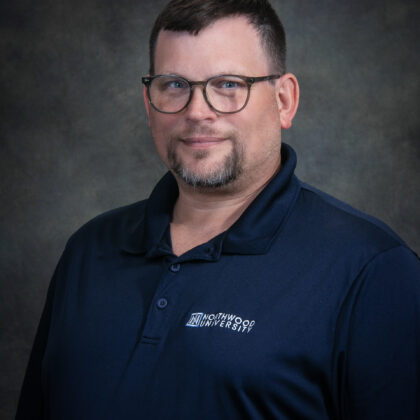
Meet Our Faculty
Connect with our Cybersecurity faculty who have real-world professional experience.

You May Also Be Interested In…



FAQs
Northwood developed the reduced-credit program in cybersecurity to serve students who seek the outcomes of a bachelor’s degree with the flexibility to enter the workforce on a shortened timeline. The reduced-credit degree program reflects our entrepreneurial spirit as an institution and provides students with choice in baccalaureate degree options. Building on our strengths, in particular our emphasis on experiential learning and career preparation, the program will provide learners with a meaningful pathway to complete their degree and embark on their career in a high-demand field in less time than a traditional 120-credit bachelor’s degree.
Yes! The pathway to transition from the 90-credit Bachelor of Applied Science in Cybersecurity to the 120-credit Bachelor of Science in Cybersecurity, or one of Northwood’s other 120-credit programs, is seamless. You’ll work with your academic advisor to make that change.
Upon completing a 90-credit degree, if an alumnus/a decides to pursue a graduate degree at an institution that requires a 120-credit hour bachelor’s degree or for continued career advancement, the student may return to complete requirements for a 120-credit Bachelor of Science.
Tuition and fees are the same for Northwood’s traditional and reduced-credit degree pathways. Learners can expect an approximate reduction of 25% of total costs based on the reduced number of credits required to complete the Bachelor of Applied Science in Cybersecurity.
Cybersecurity is an in-demand field with increasing needs for qualified, prepared applicants to fill positions across industries. The reduced-credit program was designed to prepare graduates with the skills necessary to meet this need.
Contact Northwood University’s Admissions team at (800) 622-9000.
The primary difference between an online bachelor’s degree and an on campus bachelor’s degree is how courses are delivered, not what you learn. Online students complete coursework through Northwood’s digital learning platform, while on campus students attend classes in person. Both formats follow the same academic standards and are taught by qualified Northwood faculty.
Yes. The curriculum is the same for both online and on campus versions of the program. Courses share the same learning outcomes, academic rigor, and degree requirements, ensuring all students receive a consistent education regardless of format.
Completion time depends on factors such as transfer credits, course load, and whether a student studies full-time or part-time. In many cases, online students have greater scheduling flexibility, which can allow them to complete the program at a similar pace or faster than on-campus students.
In some cases, students may be able to transition between online and on campus courses, depending on program structure and availability. Students should consult with an academic advisor to discuss flexibility options and ensure degree requirements are met.
Students applying from U.S. high schools must submit current high school transcripts and must earn a high school diploma or GED prior to enrollment. Northwood also offers a dual enrollment option for motivated students in grades 9-12 who meet eligibility criteria, including a minimum 3.0 GPA. Transfer and international applicants must submit the appropriate academic records for evaluation.
No. The application process is largely the same for online and on campus students, and the same admissions standards apply to both learning formats. Admissions counselors are available to help applicants choose the option that best aligns with their academic and professional goals.
Northwood University programs do not require standardized test scores such as the GRE or GMAT. However, applicants may choose to submit standardized test scores to be considered for merit-based scholarships. Requirements and scholarship eligibility vary by program, so applicants should review program-specific guidelines or speak with an admissions counselor.
International students may apply to on campus programs, subject to visa and immigration requirements. Eligibility for online programs may vary based on location and regulatory considerations. International applicants are encouraged to contact admissions for guidance specific to their circumstances.
Tuition rates may differ between online and on campus programs. Online programs may offer predictable per-credit tuition, while on campus programs may include additional campus-based costs. Current tuition information is available through our net price calculator.
Northwood offers a variety of financial aid options, including scholarships, grants, loans, and employer tuition assistance. Eligibility depends on program type, enrollment status, and individual circumstances.
Some programs may have additional fees related to technology, course materials, or campus services. Any applicable fees are disclosed during the admissions process so students can plan accordingly.
Both online and on campus students have access to academic advising, tutoring, library services, technical support, and career services. Northwood is committed to supporting students throughout their academic journey, regardless of learning format.
Online students connect with faculty and peers through virtual classrooms, discussion boards, email, video conferencing, and collaborative assignments. These tools are designed to foster engagement and interaction similar to an in-person experience.
Yes. Many campus events, career fairs, and networking opportunities are available to online students either virtually or in person, depending on the event. Alumni and employer networking opportunities are available to all students.
Online students typically need a reliable internet connection and a computer. Some programs may require specific software, which will be communicated prior to the course start.
Online courses may be fully asynchronous, synchronous (live), or a combination, depending on the program. This structure allows flexibility while maintaining meaningful interaction and academic accountability.
Online students have full access to digital library resources, research databases, academic support services, and virtual labs when applicable. These resources are designed to mirror on-campus academic access.
Yes. All Northwood students receive access to career coaching, job placement support, employer connections, and the alumni network, regardless of whether they study online or on campus.
No, employers value accredited degrees and relevant skills. Northwood’s online degrees meet the same academic standards as on campus programs, and employers typically focus on the institution, curriculum, and graduate competencies rather than delivery format.
Career opportunities vary by program but may include roles in business, management, marketing, finance, operations, and leadership.
Start dates vary by program. Online programs often offer multiple start dates throughout the year, while on-campus programs may follow traditional academic calendars.
Many programs offer both full-time and part-time enrollment options, allowing students to balance academics with work or personal commitments.
Online and select on campus programs are designed with working professionals in mind, offering flexible scheduling, practical coursework, and career-focused learning.
Some programs offer accelerated options that allow students to complete their degree in a shorter timeframe. Availability depends on the program and student eligibility.
Yes. Northwood University is an accredited institution, and its programs meet established academic and quality standards.
Yes. The degree earned is the same credential, regardless of whether courses are completed online or on campus.
No. Diplomas and transcripts do not indicate the delivery format of the program.