Users Can Now Earn a Certificate for Completing Northwood University’s Complimentary Philosophy of Free Enterprise Course.
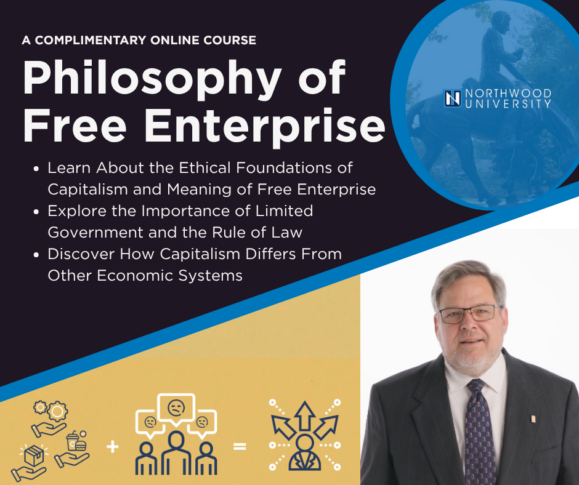
As the nation celebrates its independence, Northwood University is announcing the culmination of its complimentary online course about free enterprise and capitalism: The Philosophy of Free Enterprise Certificate of Completion.
“Northwood University is committed to advancing the values of freedom, personal responsibility, and the free market. The new certificate of completion adds value to an already powerful course, as it gives learners a tangible way to showcase their understanding of free enterprise,” stated Dr. Kristin Stehouwer, Provost and Academic Vice President of Northwood University.
The Philosophy of Free Enterprise is a complimentary, self-paced course that introduces learners to the foundational principles of free enterprise, including limited government, individual responsibility, the rule of law, voluntary exchange, and the moral case for capitalism. The course has gained traction nationally and internationally among students, educators, business professionals, and advocates of liberty.
“This is a really exciting time for The Philosophy of Free Enterprise course, which was launched in March 2022,” added Dr. Gabriel Benzecry, Northwood’s newest David E. Fry Endowed Professor in Free Market Economics. “Since that time, new lessons have been released on dates that resonate with the Northwood community and the key themes of the course. The addition of each new lesson—18 in total over three years—has culminated in today’s announcement that course takers can now earn their certificate of completion!”
“Our gratitude goes to my predecessor, Dr. Dale Matcheck, who chairs Northwood’s economics program and was the architect behind the Philosophy of Free Enterprise online course,” added Dr. Benzecry. “This initiative represents a special part of Dr. Matcheck’s legacy here at America’s Free Enterprise University, as the course features timeless lessons that will help future generations understand why freedom and ethical leadership—not central planning—drive progress.”
Newest Lesson Explores Who Protects the Consumer
Examining Markets, Competition, and Consumer Protection
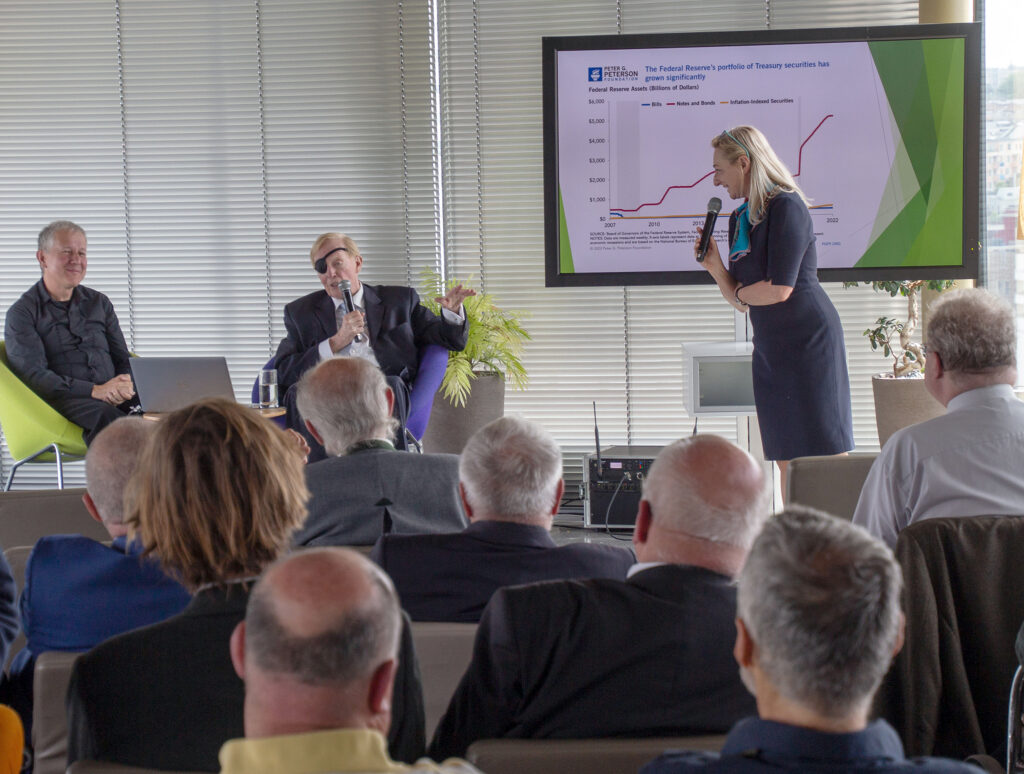
The final lesson in the online course explores who protects the consumer in a free-market society. The lecture is presented by Dr. Michael Makovi, an economics professor and Bretzlaff Scholar at Northwood University.
“It is often believed that without government regulation, there would be nothing to protect consumers, and businesses would lie, cheat, and defraud without limitation,” explains Dr. Makovi in the lecture, “Who Protects the Consumer?” “This is why, so it is claimed, government regulation agencies such as the Food and Drug Administration, the FDA, must be created and empowered. But in fact, forces and tendencies inherent to the competitive market process are often sufficient to protect consumers without the need for much, if any, government protection. Government regulation is not needed as often as people sometimes think it is, and we often fail to give the competitive market process credit for protecting consumers as often as it really does.”
The major principle is that any market failure is a profit opportunity.
“In other words, any time that a single business or all businesses in general fail to provide consumers what they want, a profit opportunity is created for any entrepreneur who will do better,” Dr. Makovi notes. “For example, ignorant consumers can fall prey to dishonest businesses that exploit their ignorance to sell them a shoddy or harmful product. But this means that consumers will usually be willing to pay money to someone who can educate them and help them protect themselves. This, in turn, means that some entrepreneurs can make a profit by supplying that information. It also means that any one business will make a larger profit than its own competitors if it can provide better assurance and confidence to the consumer.”
Dr. Makovi uses the purchase of a used car to illustrate this concept, as customers are willing to pay money to third parties, such as mechanics and companies like Carfax, to avoid being swindled. He also illustrates how vehicle safety is driven by the private sector, which began safety testing and regulating vehicle safety well before the federal government established the National Highway Traffic Safety Administration.
Designed for Learners of All Backgrounds
Short, Engaging Lessons Built for Accessibility
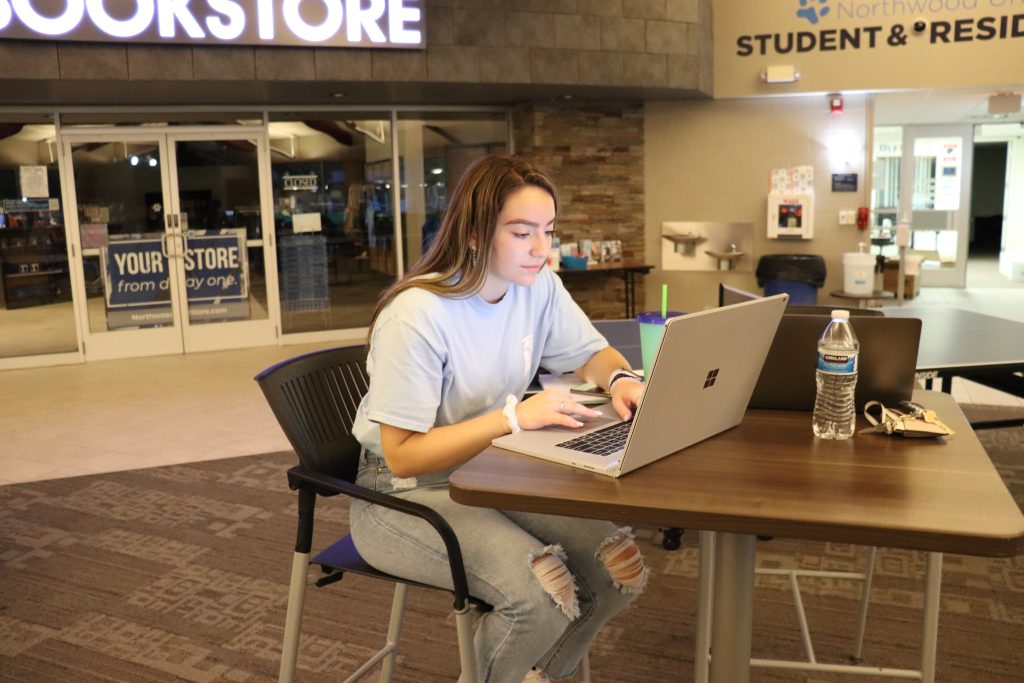
This lesson, like all the lessons in The Philosophy of Free Enterprise online course, appeals to learners from all educational levels and backgrounds. Each lesson includes an easily digestible lecture that’s less than 6-10 minutes in length, incorporating helpful animations and engaging dialogue.
In addition to viewing insightful lectures from Northwood University Economics and Philosophy faculty, learners enrolled in the Philosophy of Free Enterprise course can access thought-provoking supplemental reading material following each lesson. All progress will be saved as users complete each of the four modules in the course.
Watch the Lectures on YouTube
Complete List of Philosophy of Free Enterprise Lessons

For those who prefer to explore the ideas without committing to the full course experience, each lecture is also available to watch individually on Northwood University’s YouTube channel. The standalone format also makes it easy to revisit lessons or share them with colleagues, students, or peers.
The Importance of Business
- A Time Traveler’s Brief History of Progress
- Innovation & Innovism
- Vocation of Business
- Entrepreneurship
The Free Enterprise System
- Economic Freedom
- Prices, Knowledge, & Incentives
- Private Property
- Free Trade or Protectionism?
- Free Markets & Sustainability
Limited Government and the Rule of Law
- Make a Law, Light a Match
- Rights from the Start
- America is Not a Democracy
- Constitution, Rules, and Games
Solving Problems in Freedom
Supporting America’s Free Enterprise University
How to Get Involved and Give Back
The videos and Philosophy of Free Enterprise online course are possible thanks to the principal donors behind this effort: Donald S. Gottwald, a 1988 alumnus, and his wife, Pamela. Thanks also go to the Thomas F. and Harriet S. Oakley Family Trust for their generous gift.
“Northwood University is grateful to the Gottwalds and the Oakley Trust for supporting this opportunity to bring education about the importance of free enterprise and other tenets of the Northwood Idea to the general public. It has been an honor leading this initiative, as this course helps showcase how entrepreneurs drive progress, as well as the importance of limited government and rule of law, and why capitalism is the only economic system that history has proven to lift billions of people out of poverty.”
Dr. Dale Matcheck, Professor and Department Chair, Economics.
To support Northwood’s role as America’s Free Enterprise University, visit our giving page or contact Northwood’s advancement office.